m

Blog

How Air Compressors Work and Their Essential Spare Parts
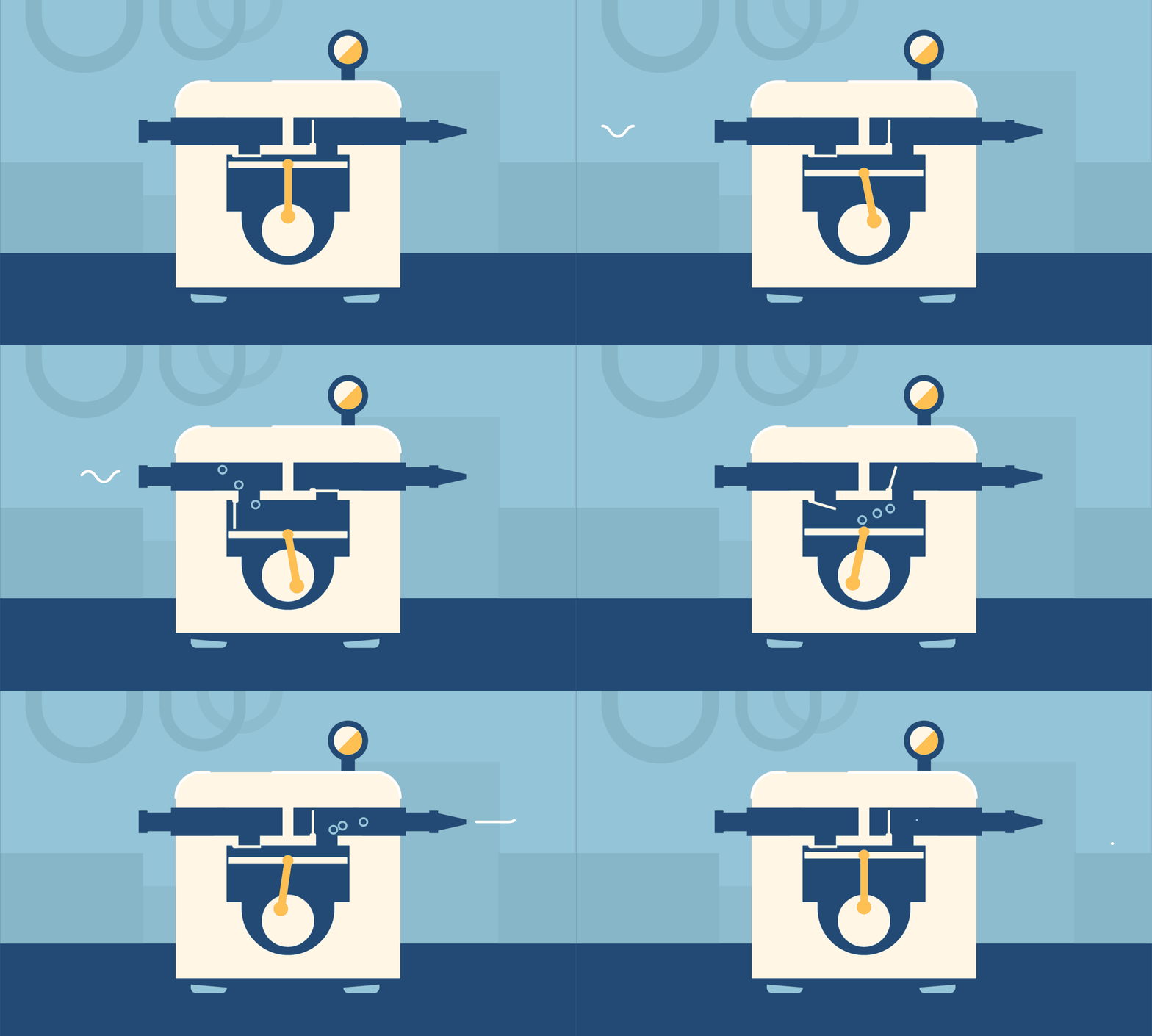
image Courtesy by - www.bigrentz.com

Air compressors function by converting power (from an electric motor, diesel, or gas engine) into potential energy stored in compressed air. The process involves drawing in ambient air, compressing it to a higher pressure, and then releasing it to perform various tasks.

Whether you are looking for a manufacturing partner for a compressors or a compressor supplier to provide additional capacity, MR COMPRESSORS we are here for you.

How Air Compressors Work

Air compressors function by converting power (from an electric motor, diesel, or gas engine) into potential energy stored in compressed air. The process involves drawing in ambient air, compressing it to a higher pressure, and then releasing it to perform various tasks.

Basic Working Principle:

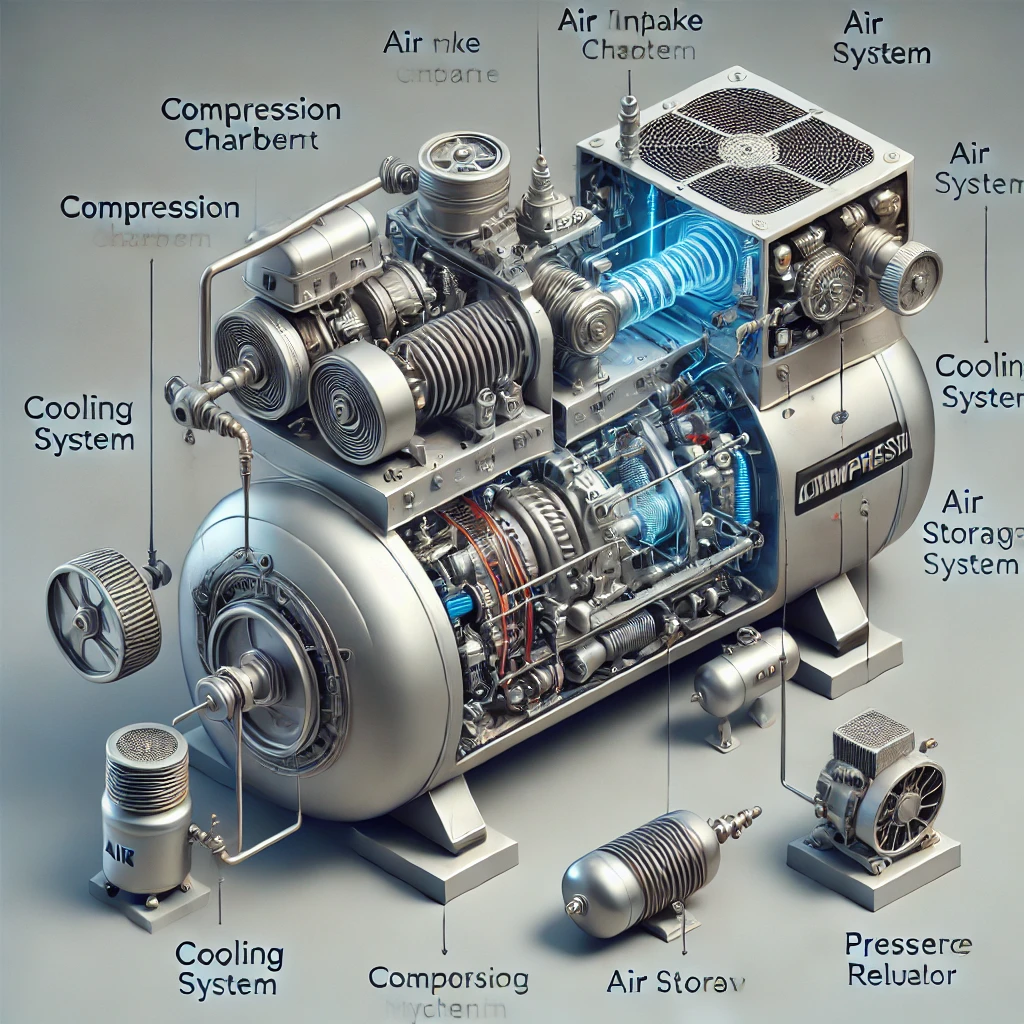
  1. Air Intake: The compressor pulls in outside air through an intake valve.
  2. Compression: The air is compressed using either a piston (reciprocating compressors) or rotating screws (screw compressors).
  3. Cooling & Lubrication: The compressed air is cooled to remove heat generated during compression, and lubrication ensures smooth operation.
  4. Storage & Regulation: The compressed air is stored in a tank or sent directly to applications through a regulator that controls pressure.
  5. Usage: The compressed air is used for applications such as inflating tires, powering tools, or running industrial machinery.

Key Spare Parts of an Air Compressor

To maintain efficiency and longevity, air compressors require regular maintenance and occasional replacement of spare parts. Some of the critical components include:

1. Air Filters

  • Prevents dust, debris, and contaminants from entering the compressor.
  • Ensures clean air intake, protecting internal components.

2. Oil Filters & Separators

  • Oil-lubricated compressors require oil filters to remove impurities from the lubrication system.
  • Air-oil separators ensure that the compressed air is free from excess oil.

3. Pistons & Cylinder (For Reciprocating Compressors)

  • The piston moves inside the cylinder to compress air.
  • Worn-out pistons and cylinders can lead to efficiency loss and require periodic replacement.

4. Rotors & Air End (For Screw Compressors)

  • Screw compressors use interlocking rotors to compress air.
  • The air end is the heart of the screw compressor and should be maintained for peak efficiency.

5. Valves (Intake & Discharge Valves)

  • Regulate the entry and exit of air into the compressor chamber.
  • Malfunctioning valves can reduce performance and increase energy consumption.

6. Pressure Switch & Safety Valves

  • The pressure switch regulates compressor operation by turning it on/off based on pressure levels.
  • Safety valves prevent over-pressurization, ensuring safe operation.

7. Belts & Couplings

  • Drive belts connect the motor to the compressor pump, ensuring power transmission.
  • Worn-out belts must be replaced to prevent unexpected breakdowns.

8. Cooling System (Intercoolers & Aftercoolers)

  • Reduces the temperature of compressed air before storage or usage.
  • Essential for maintaining efficiency and preventing overheating.

9. Drain Valves & Moisture Separators

  • Drain valves remove accumulated moisture from the air receiver tank.
  • Moisture separators ensure that water does not mix with compressed air, preventing damage to tools and equipment.

10. Control Panel & Sensors

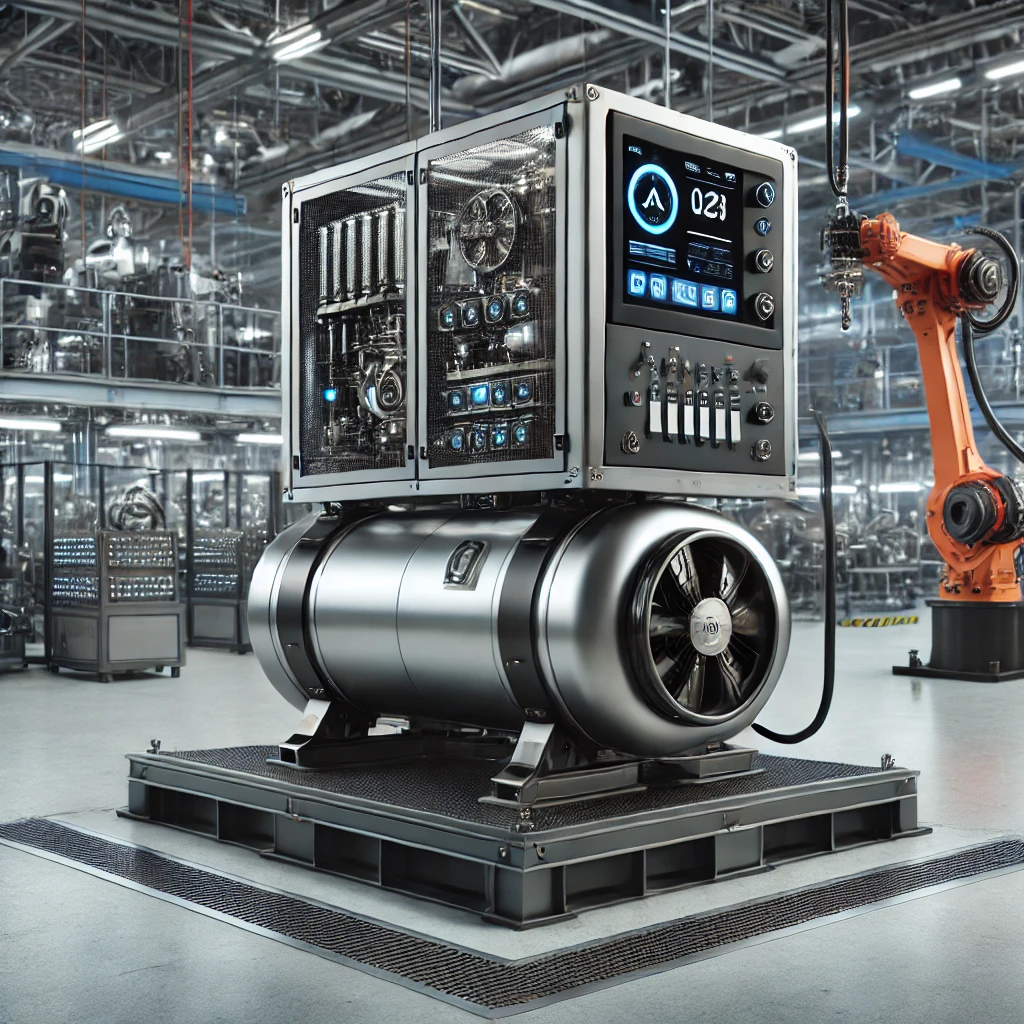
  • Modern air compressors come with digital control panels for real-time monitoring.
  • Sensors detect temperature, pressure, and system faults for preventive maintenance.

Conclusion

Understanding how air compressors work and maintaining their spare parts is essential for ensuring efficient operation, reducing downtime, and extending the lifespan of the equipment. Regular maintenance and timely replacement of critical parts can enhance performance and prevent costly repairs.

Would you like a detailed guide on troubleshooting common air compressor issues?


Whether you have inquiries about compressors, need technical support, or require a custom solution, our team is here to assist you.

Post a comment

Your email address will not be published. Required fields are marked *